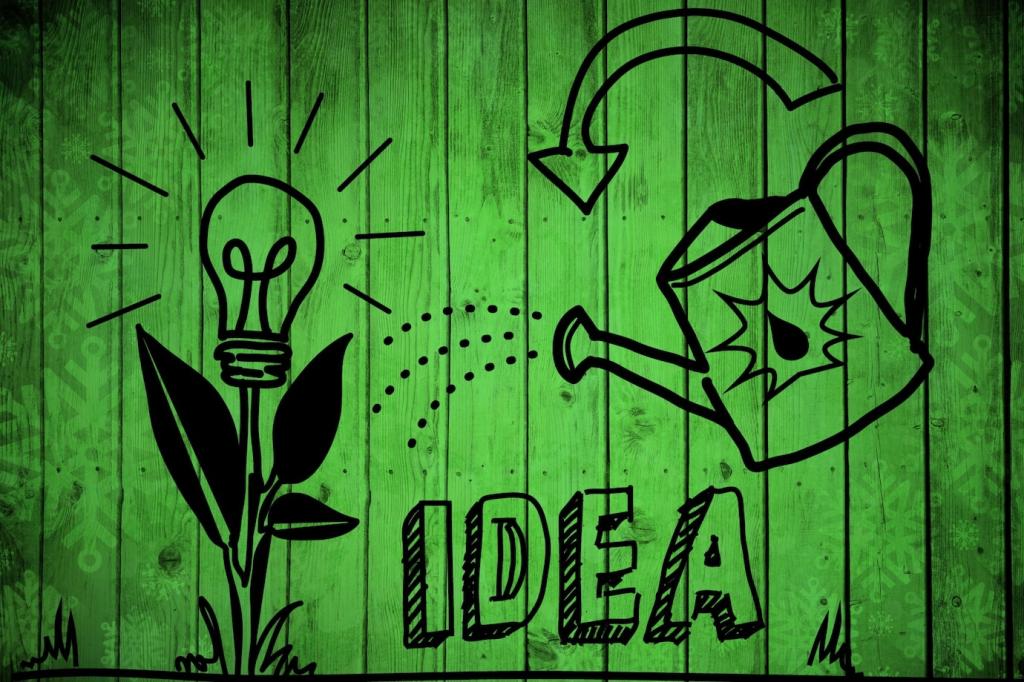
Selected theme: Crafting Authentic Narratives for Sustainable Living. Welcome to a space where honest stories move people more than perfect slogans. Here, we explore how real moments, measured impacts, and empathetic voices can turn sustainability from an abstract goal into daily practice. Subscribe, share your experiences, and help us grow a community of truth-telling change-makers.

Why Authentic Narratives Matter in Sustainable Living

Audiences recognize greenwashing instantly. Credibility is built through transparent trade-offs, clear sourcing details, and humility about what remains imperfect. Share one product, habit, or policy you improved—and where you still struggle—so readers see the real journey behind the headline.

Why Authentic Narratives Matter in Sustainable Living

Stories reduce defensiveness by inviting identification rather than argument. When a character faces constraints similar to ours, we imagine our own path forward. Use specific stakes, time-bound decisions, and consequences to encourage reflection, not shame, and invite thoughtful, voluntary change.

Why Authentic Narratives Matter in Sustainable Living

Pair feeling with facts: a memory of smoky summer air beside a concise chart showing rising heat days. The heart opens the door; the data keeps it open. Comment with one statistic that changed your mind—and the moment it suddenly felt personal.

At dawn, Mara checks the hives behind the library where asphalt once blistered in summer heat. Native hedgerows hum with life. A retired bus driver shares weather notes, and children record first blooms, practicing patience with clipboards and unstoppable curiosity.

Field Notes: A Beekeeper’s Quiet Revolution

Structure with Stakes
Try a three-beat arc: a relatable problem, a constrained decision, and a measured outcome. Keep stakes human-scaled: comfort, dignity, time saved, money redirected. This focus encourages readers to evaluate options without feeling overwhelmed by abstract planetary calculations right away.
Tone that Invites, Not Judges
Write as a host, not a referee. Replace absolutes with invitations; share doubts and learning curves. A gentle, curious tone travels farther than scolding. Ask questions, note contradictions, and celebrate incremental progress without pretending it solves everything in a single shining gesture.
Sensory Anchors
Describe the rough weave of a repaired canvas bag, the mineral scent after rain on a newly depaved lot, the hiss of an induction pan. Sensory anchors turn values into experiences, helping readers remember choices through texture, sound, and taste, not slogans.

Visual and Data Storytelling That Builds Trust

Pair transformation photos with time frames, materials used, and labor hours. Include what didn’t work and why. A caption noting failed soil mixes or supply delays teaches more than flawless reveals, and encourages honest dialogue rather than curated perfectionism.

Visual and Data Storytelling That Builds Trust

Track three metrics that matter to your story, not thirty that pad a report: repair rate, commute emissions avoided, local purchases. Visualize weekly or monthly changes, add footnotes, and link raw data. Invite readers to adapt the template and share improvements openly.
Invite contributors to review drafts, correct context, and choose photos. Offer shared ownership of final posts. A simple agreement that prioritizes consent and attribution builds durable partnerships and avoids the extractive habits many sustainability narratives unintentionally repeat.

Community Amplification Without Performative Activism

Prioritize depth over reach. Host small, themed exchanges—repair diaries, balcony biodiversity notes, transit wins—then summarize takeaways publicly with credit. Intimacy nurtures insight, and insight attracts the right collaborators who can translate stories into durable neighborhood and workplace solutions.

Community Amplification Without Performative Activism

Ethics and Representation in Sustainable Narratives

Explain purpose, audience, and potential risks before recording or photographing. Offer opt-outs and allow review. When trust is protected, people speak more freely, and the resulting narrative becomes stronger, kinder, and more likely to inspire responsible action across communities.

Ethics and Representation in Sustainable Narratives

Credit quotes, techniques, and datasets clearly. Link upstream sources and compensate where appropriate. Proper attribution models the fairness we advocate and turns your platform into an ecosystem where knowledge circulates with recognition instead of disappearing into untraceable feeds.
Tempo-clock
Privacy Overview

This website uses cookies so that we can provide you with the best user experience possible. Cookie information is stored in your browser and performs functions such as recognising you when you return to our website and helping our team to understand which sections of the website you find most interesting and useful.